

Odoo is a solid ERP software, no one is arguing that. It brings CRM, accounting, HR, and project management under one roof, which is why so many small and medium businesses give it a shot.
But staying with it is a different story. Costs creep up, setup gets complicated, and before long, you are paying for features you barely touch.
If that sounds familiar, it is time to look at your options. This list covers five Odoo alternatives worth considering in 2026, tools that handle your core business management needs without the usual headaches. One of them, built right into WordPress, might just be the one you have been looking for.
Why Businesses Look for Odoo Alternatives
Odoo works well enough at the start. But as your business grows, a few frustrations tend to surface that are hard to ignore.
- Costs climb faster than expected. The free Community edition covers only one app. To access accounting, payroll, or proper HR features, you need the Enterprise plan, and the price goes up with every user and module you add.
- Setup is rarely straightforward. Getting Odoo configured the way you need it usually requires developer involvement, which adds time and budget before you even get started.
- Performance slows down at scale. As your data grows and more people use the system, things can drag. It is not uncommon for teams with high data volumes to run into noticeable slowdowns.
- Community support has its limits. The free tier relies heavily on forums and self-help documentation, which is not always enough when something breaks at a critical moment.
What to Look for in an Odoo Alternative
Not every alternative will be the right fit, so it helps to know what actually matters before you start comparing options.
- Core modules are included from the start. Look for a platform that covers CRM, HR management, and accounting without requiring a stack of paid add-ons to function properly.
- Easy to set up and use. A good alternative should get you running without weeks of configuration or outside developer help.
- Transparent and predictable pricing. Hidden fees and per-module charges are part of what makes Odoo frustrating. Look for something with a clear structure you can plan around.
- Fits the tools you already use. If your business runs on WordPress, an ERP solution that lives inside your existing dashboard saves a lot of friction compared to managing a separate platform altogether.
The 5 Best Odoo Alternatives for Small Businesses
There is no shortage of ERP software options out there, but most lists throw in tools that are either too expensive, too complex, or simply not built for smaller teams.
This list keeps things practical. Each tool here covers the core needs of a growing business, whether that is HR, CRM, accounting, or all three together. One of them is built specifically for WordPress users and deserves a closer look than the rest.
Here are the five best Odoo alternatives worth considering in 2026:
- WP ERP
- ERPNext
- Zoho One
- NetSuite (Oracle)
- Bitrix24
Every tool on this list brings something different to the table. The right one for you depends on how your business is set up, what platform you are already running on, and how much you want to spend. Let’s break each one down so you can make a call with the full picture in front of you.
1. WP ERP – Best Odoo Alternative for WordPress Users
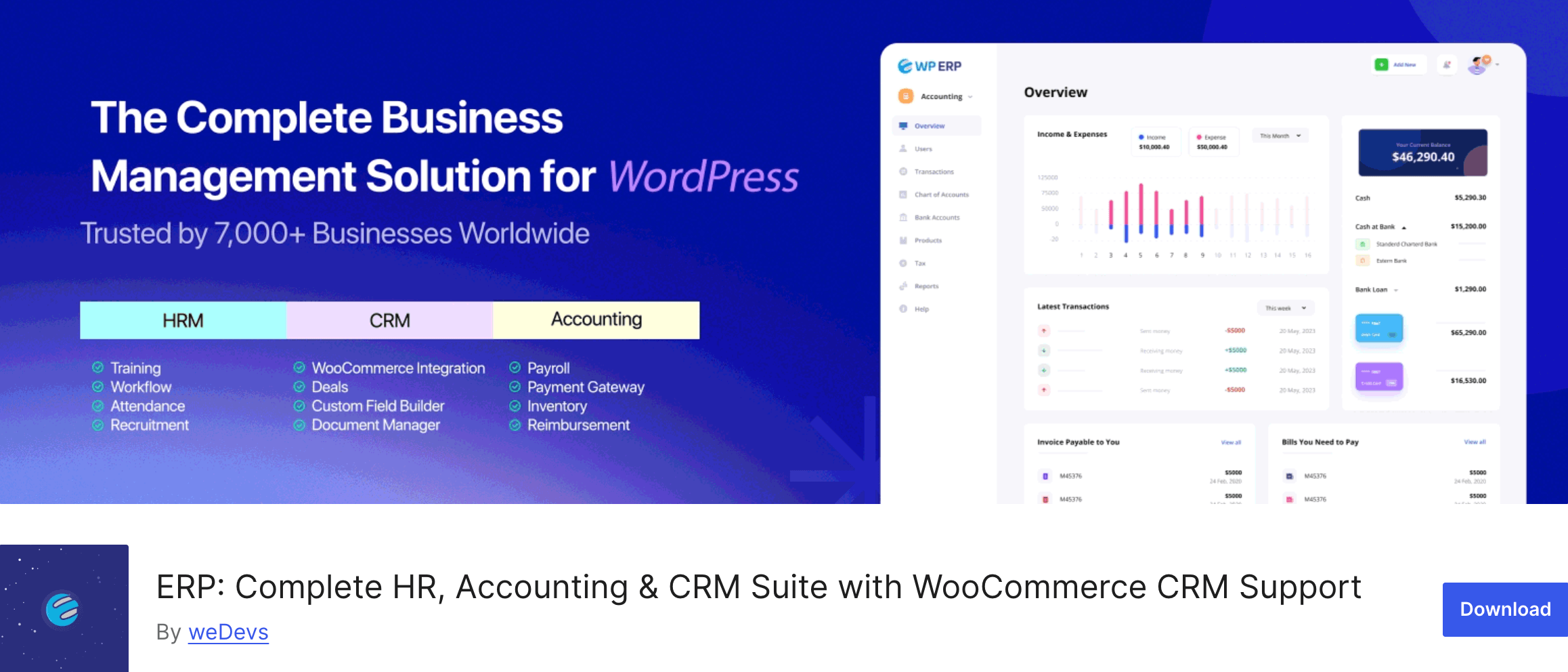
If your business runs on WordPress, WP ERP is probably the most practical decision you can make. Built by weDevs, it is the first full-fledged ERP system designed to work entirely inside your WordPress dashboard. No separate platform to log into, no migration headaches, no learning a completely new interface.
You install it, activate it, and your business management tools are right there where you already work.
It covers the three core areas every small and medium business needs: HR management, CRM, and accounting.
And with 20+ extensions available, you can expand the functionality as your business grows without switching to a different tool altogether.
For WordPress-powered businesses, nothing in the ecosystem comes close to what WP ERP offers.
Key Features
- HR Management: Create employee profiles, manage leaves, track attendance, handle announcements, and generate HR reports, all from your WordPress backend.
- CRM: Manage contacts, track leads, follow up with clients, monitor your sales pipeline, and automate recurring tasks with a clean, easy-to-use CRM module.
- Accounting: Handle invoices, payments, expenses, and financial reports without needing a separate accounting tool.
- WooCommerce Integration: Syncs customer and order data from your WooCommerce store directly into the CRM and accounting modules.
- 20+ Extensions: Add project management, payroll, document management, and more as your needs grow.
- Unlimited Users: You pay based on roles, not headcount, which keeps costs predictable as your team expands.
- Free Version Available: The core plugin is free with solid features, making it a low-risk starting point for small businesses.
Why It’s Better Than Odoo
Odoo requires you to set up and manage a separate platform, often with developer help. WP ERP lives inside WordPress, which means zero extra logins, no integration complexity, and a setup that takes minutes rather than weeks.
While Odoo locks key features like accounting and payroll behind its Enterprise plan, WP ERP gives you all three core modules from the start. Pricing is also significantly more affordable, and since you are not paying per user, your costs do not spike every time you bring someone new onto the team.
For any business already on WordPress, switching to a separate ERP platform when WP ERP exists simply does not make sense. It is the most natural, cost-effective, and beginner-friendly business management solution available in the WordPress ecosystem.
Price
WP ERP has a free version that covers the essentials for small businesses.
The Pro plan starts at around $9.99 per month, which is significantly lower than what Odoo Enterprise charges once you factor in users and modules. Extensions are available as add-ons, so you only pay for what you actually need.
2. ERPNext
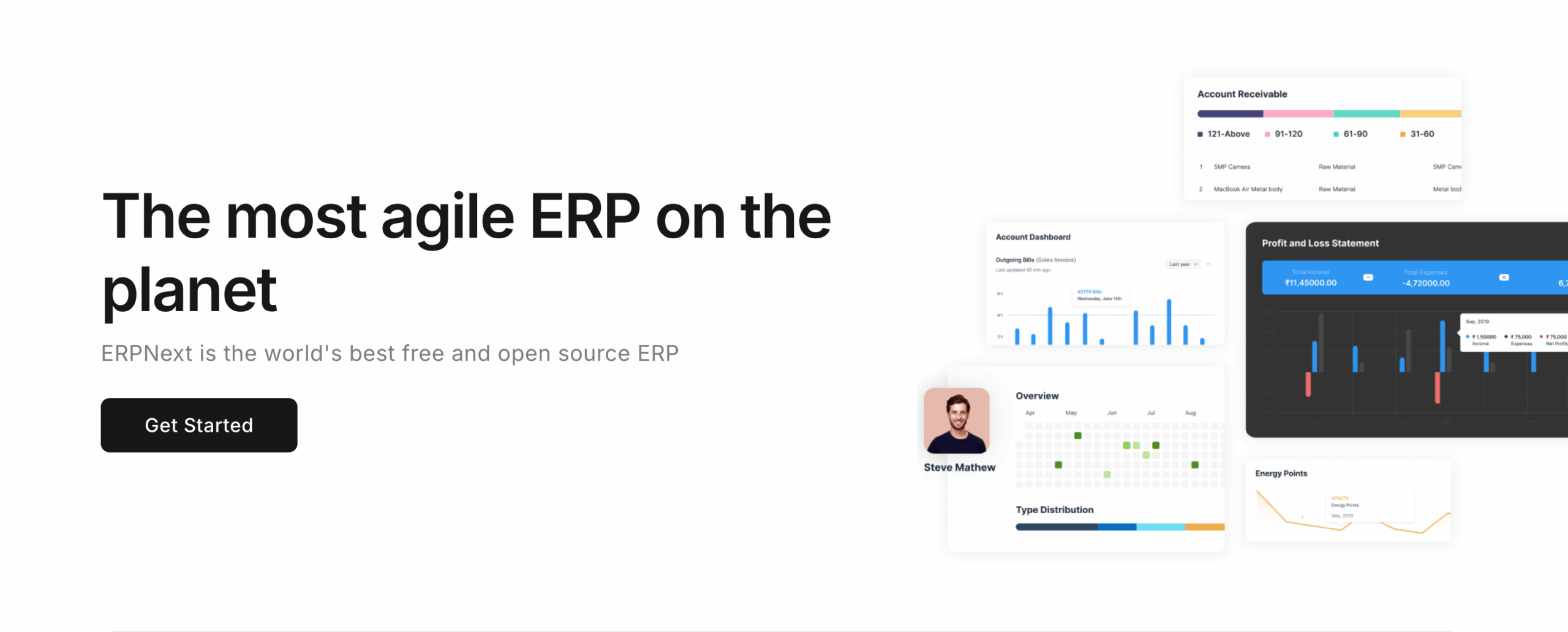
ERPNext is the closest open-source competitor to Odoo, and in many ways it is a cleaner, more honest version of what Odoo promises to be.
Everything is included from the start with no features hidden behind a paywall. If you have some technical know-how and want full control over your ERP system without vendor lock-in, ERPNext is a serious option.
Key Features
- Accounting and Finance: Invoicing, expense tracking, tax compliance, and financial reporting all built in.
- HR and Payroll: Employee management, attendance tracking, payroll processing, and leave management.
- CRM: Lead management, sales pipeline tracking, and customer database.
- Inventory Management: Stock control, multi-warehouse support, and order fulfillment tracking.
- Manufacturing: Production planning, bill of materials, and work orders.
- Project Management: Task scheduling, timelines, and team collaboration tools.
Why It’s Better Than Odoo
Odoo divides its features between a free Community edition and a paid Enterprise edition. ERPNext gives you everything in one package with no paywalls.
You also get unlimited users without extra charges, which is a significant advantage over Odoo’s per-user pricing model. The interface is simpler and more intuitive, and the community is active and genuinely helpful.
Price
ERPNext is free to self-host. Cloud hosting starts at around $10 to $25 per user per month depending on the hosting provider you choose.
3. Zoho One
Zoho One is a comprehensive SaaS business management suite that bundles over 40 integrated applications into a single subscription. It is polished, easy to get started with, and covers everything from CRM and HR to marketing automation and finance.
For teams that want a ready-to-use platform without dealing with self-hosting or technical setup, Zoho One is one of the strongest options available.
Key Features
- CRM: Full sales pipeline management, lead tracking, workflow automation, and customer communication tools.
- HR Management: Recruitment, onboarding, attendance, payroll, and performance tracking.
- Accounting: Invoicing, expense tracking, bank reconciliation, and financial reporting through Zoho Books.
- Marketing Automation: Email campaigns, social media management, and customer engagement tools.
- Project Management: Task management, timelines, collaboration, and reporting.
- 40+ Integrated Apps: Everything connects within the Zoho ecosystem without third-party integrations.
Why It’s Better Than Odoo
Zoho One is significantly easier to set up and use than Odoo. There is no need for developer involvement to get started, and the interface is clean and modern.
While Odoo requires you to pick and pay for modules separately, Zoho One gives you access to the full suite under a single subscription. Support is also more structured and reliable compared to Odoo’s Community edition.
Price
Zoho One starts at around $37 per user per month when billed annually. It is not the cheapest option on this list, but considering the number of apps included, the value is reasonable for growing teams.
4. NetSuite

NetSuite by Oracle is one of the most recognized cloud-based ERP platforms in the world. It is built for businesses that have moved past the SMB stage and need enterprise-grade financial management, global compliance, and the ability to scale across multiple locations or countries.
It is a significant investment, but for the right business, it delivers capabilities that Odoo simply cannot match.
Key Features
- Financial Management: Advanced accounting, budgeting, forecasting, and multi-entity consolidation.
- CRM: Sales automation, marketing campaigns, customer portals, and pipeline tracking.
- Inventory and Order Management: Multi-location warehouse management, demand planning, and fulfillment tracking.
- HR and Payroll: Workforce management, talent acquisition, and payroll processing.
- Business Intelligence: Real-time dashboards, KPI tracking, and customizable reporting.
- Global Compliance: Multi-currency, multi-language, and tax compliance across 200+ countries.
Why It’s Better Than Odoo
NetSuite is built for scale in a way that Odoo is not. Businesses running complex multi-entity operations or expanding internationally often run into Odoo’s limitations fairly quickly. NetSuite handles those scenarios out of the box.
The financial reporting and compliance tools are also considerably more advanced, and the platform is backed by Oracle’s enterprise-grade infrastructure and support.
Price
NetSuite pricing starts at around $999 per month as a base license fee, with additional per-user costs on top. It is firmly in the enterprise budget range and is best suited for businesses that have outgrown more affordable tools.
5. Bitrix24
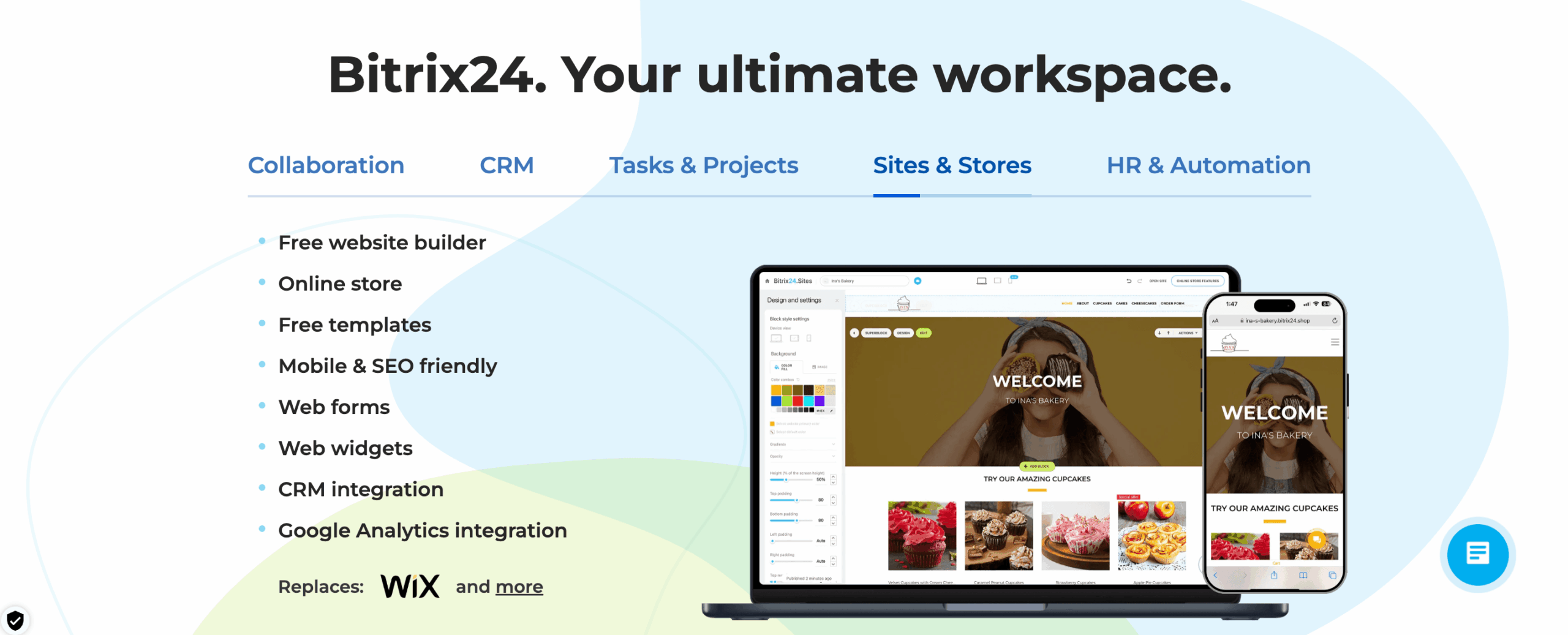
Bitrix24 is an all-in-one platform that combines CRM, project management, team communication, and HR tools in a single workspace. It is particularly well suited for teams where collaboration and internal communication are just as important as business management.
The free plan is genuinely generous, making it one of the more accessible options on this list for small businesses watching their budget.
Key Features
- CRM: Contact management, sales pipeline, lead tracking, and automation tools.
- Project Management: Task boards, Gantt charts, milestones, and team collaboration features.
- HR Tools: Employee directory, time tracking, leave management, and onboarding workflows.
- Communication: Built-in chat, video calls, and a social intranet for internal team communication.
- Document Management: File storage, shared workspaces, and document collaboration.
- Automation: Workflow automation for sales, marketing, and internal processes.
Why It’s Better Than Odoo
Bitrix24 is considerably easier to get started with than Odoo and does not require any technical setup. The free plan covers a solid range of features that would cost money on Odoo.
Where it really stands out is in team collaboration, offering built-in communication tools that Odoo does not provide natively. For smaller teams that need CRM and project management without a full enterprise ERP setup, Bitrix24 hits a practical sweet spot.
Price
Bitrix24 offers a free plan with core features for unlimited users. Paid plans start at $49 per month for the Basic plan, billed annually, covering up to 5 users with expanded features and storage.
Quick Comparison: Odoo Alternatives at a Glance
Before making a decision, here is a side-by-side look at how each tool stacks up across the most important factors.
| Tool | Best For | WordPress Native | Free Version | Starting Price |
|---|---|---|---|---|
| WP ERP | WordPress-based SMBs | Yes | Yes | $9.99/month |
| ERPNext | Open-source lovers | No | Yes (self-hosted) | Free |
| Zoho One | SaaS-first teams | No | No | $37/user/month |
| NetSuite | Enterprises | No | No | $999/month |
| Bitrix24 | Collaboration-heavy teams | No | Yes | $49/month |
Which Odoo Alternative is Right for You?
The honest answer is that it depends on where your business currently sits and what you are trying to solve.
If you are running a WordPress-based business, the choice is straightforward. WP ERP gives you a complete HR, CRM, and accounting solution without ever leaving your dashboard.
No extra platforms, no separate subscriptions for tools that should already talk to each other, and no developer needed to get things running. It is built for exactly the kind of business that WordPress powers, and nothing else in that space comes close.
If you are open-source minded and have the technical resources to handle self-hosting, ERPNext is a genuinely strong option. You get everything Odoo offers, without the paywall frustration.
For teams that want a polished SaaS experience with a wide range of integrated tools, Zoho One is worth a serious look. It takes the complexity out of setup while still covering all the core bases.
Final Thoughts
Finding the right ERP software is less about picking the most feature-rich tool and more about finding the one that fits how your business actually works.
Odoo is not a bad product. But for a lot of small and medium businesses, the costs, complexity, and setup requirements make it harder to love over time. The good news is that the alternatives have genuinely caught up, and in some cases, they do a better job for specific types of businesses.
If your site runs on WordPress, give WP ERP a try. Start with the free version, explore the modules, and see how much simpler business management can feel when everything lives in one place you already know. Chances are, you will not miss Odoo at all.